
Silk Screen Printing Guide Selangor
Silk Screen Printing in Selangor: Cost, Minimum Order & Process
Learn what silk screen printing is, how the process works, cost breakdown, MOQ, suitable fabrics and why it remains one of the most cost-effective printing methods for bulk apparel orders.
Quick summary: Silk screen printing is one of the best choices for bulk orders such as company uniforms, event T-shirts, promotional shirts and corporate apparel. While there may be a setup fee at the beginning, the cost per piece becomes lower as the quantity increases. That is why silkscreen printing is widely used by companies, schools, factories, event organisers and resellers.
If you are looking for silk screen printing in Selangor, chances are you need a large quantity of T-shirts or uniforms at a more affordable price. Whether it is for staff uniforms, event shirts, class shirts, club shirts, promotional campaigns, corporate giveaways or reseller orders, silk screen printing remains one of the most reliable and cost-effective printing methods in the apparel industry.
In Selangor, demand for silkscreen printing is strong because many companies, schools, universities, factories, NGOs, brands, resellers and event organisers need apparel in bulk quantities. Compared with other methods such as DTF or heat transfer, silk screen printing is more suitable when the design is simple, uses solid colours and requires a high quantity. With the right process, the print result can look clean, durable and professional.
SelangorPrint provides silk screen printing services for customers around Shah Alam, Klang, Subang, Petaling Jaya, Kuala Lumpur, Klang Valley and across Malaysia. With over 9+ years of experience in the printing industry and more than 14 million pieces printed, SelangorPrint is a strong choice for customers who need factory pricing, consistent output and a team that understands bulk order requirements.
What Is Silk Screen Printing?
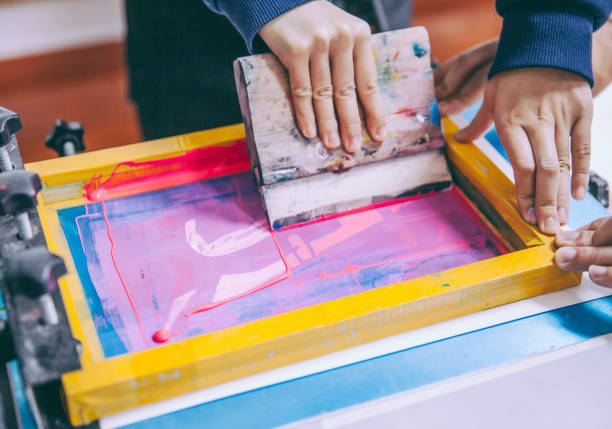
Silk screen printing, often called silkscreen printing, is a printing method that uses a special screen and ink to transfer a design onto fabric. In this process, the artwork is separated by colour. Each colour usually requires its own screen. The ink is then pushed through the screen onto the fabric using a squeegee.
This method has been used in the T-shirt printing industry for many years because it produces durable prints, solid colours and consistent results for large-volume production. For designs such as one-colour company logos, event text, campaign slogans, simple artwork or two-to-three-colour graphics, silk screen printing can deliver a very professional result.
Silkscreen is not just an old printing method. It is still highly relevant because its cost is very competitive for bulk orders. If you want to print 100 pieces, 300 pieces, 500 pieces, 1,000 pieces or more with the same design, silk screen printing is usually more cost-effective than many other printing methods.
Silk Screen Printing Process: Step by Step
To achieve a clean and consistent silkscreen result, every step must be handled carefully. Each stage affects the sharpness of the design, ink durability and colour consistency across all pieces.
Basic silkscreen process:
- Artwork checking: The team checks the logo, design, print size, colours and print placement.
- Colour separation: The design is separated by colour because each colour usually needs a separate screen.
- Screen preparation: The screen is coated with emulsion and prepared according to the artwork.
- Artwork exposure: The artwork is transferred onto the screen using a light exposure process.
- Ink mixing: The ink is prepared according to the required colours, including brand colours if needed.
- Printing: Ink is pushed through the screen onto the fabric using a squeegee.
- Curing / drying: The print is heated or dried so the ink bonds properly and becomes wash-resistant.
- Quality check: The shirts are checked to ensure the print is clean, correctly positioned and consistent.
For small orders, the setup process may seem like a lot of work. However, for large orders, this setup becomes highly worthwhile because the same screen can be used to print hundreds or thousands of pieces. This is the main reason silk screen printing is a preferred method for bulk production.
Silk Screen Printing Cost Breakdown
The cost of silk screen printing usually consists of two main parts: setup fee and per-piece cost. The setup fee covers screen preparation, colour separation, emulsion, exposure, alignment and other pre-production work before printing begins. The per-piece cost covers ink, labour, machine time and the printing process for each garment.
For a one-colour design, setup is usually lower because only one screen is required. If the design has two, three or more colours, more screens are needed. The more colours there are, the higher the setup cost and alignment time. That is why silkscreen printing is most suitable for designs that are not too complex.
The main advantage of silkscreen printing is that the cost per piece becomes cheaper as the order quantity increases. For example, a setup fee may feel expensive for 20 pieces, but it becomes much more cost-effective for 300 or 1,000 pieces because the setup cost is shared across a larger quantity.
| Cost Component | What It Means | Impact on Price |
|---|---|---|
| Setup Fee | Cost for preparing screens, artwork separation, exposure and alignment. | Higher if the design has more colours or multiple print positions. |
| Per-Piece Cost | Printing cost for each garment. | Lower when the order quantity increases. |
| Number of Colours | Each colour usually needs a separate screen. | One-to-three-colour designs are usually the most economical. |
| Print Size | Left chest, A4, A3 or full front/back print. | Larger prints use more ink and production time. |
| Print Position | For example: left chest, back, sleeve or bottom hem. | More print positions mean more production steps. |
Minimum Order Quantity for Silk Screen Printing
The minimum order quantity, or MOQ, for silk screen printing is usually more suitable for medium-to-large orders. This is because screen setup requires time and cost. For very small quantities, the price per piece can become high and may not be as worthwhile compared with DTF printing.
As a practical guide, silk screen printing is more suitable for orders starting around 50 pieces and becomes more cost-effective at 100 pieces, 300 pieces, 500 pieces or more. For orders in the thousands, silkscreen is usually one of the most competitive printing methods in terms of price.
Simple MOQ guide:
- Below 30 pieces: usually less cost-effective for silkscreen; DTF may be more suitable.
- 50–100 pieces: suitable if the design is simple and does not use too many colours.
- 100–500 pieces: highly suitable for staff uniforms, event shirts and campaign shirts.
- 500 pieces and above: best for factory pricing and bulk production.
However, the actual MOQ still depends on the design, number of colours, print size and garment type. Before confirming an order, it is best to send your artwork and quantity to SelangorPrint so the quotation can be calculated more accurately.
Best Fabrics for Silk Screen Printing
Silk screen printing can be used on various types of fabrics, but the final result depends on the ink type and fabric surface. Common fabrics include cotton, TC, CVC, lacoste cotton, selected polyester, selected dry-fit fabrics and some uniform fabrics. For promotional T-shirts and corporate events, cotton and TC are often popular because the cost is stable and the shirts are comfortable to wear.
For staff uniforms, fabrics such as cotton, CVC or lacoste can offer a cleaner and more comfortable look. For large events or campaigns, customers usually choose more budget-friendly materials that are still suitable for silkscreen printing. If the shirt is used for outdoor activities or sports, the printing team should check the fabric type first because not all inks are suitable for all materials.
Choosing the right fabric is important because it affects print durability, colour output, hand feel and final cost. At SelangorPrint, our team can recommend suitable fabric options based on your budget, usage and order quantity.
Colour Limitation: Why Colours Matter in Silkscreen Printing
Silkscreen printing is excellent for solid colours. For example, a white logo on a navy shirt, orange text on a black shirt or blue artwork on a white shirt can look sharp, clean and professional. However, if the design has too many colours, fine gradients or realistic images, silkscreen becomes more complex.
This is because each colour usually requires a separate screen. If a design has five colours, the setup, alignment and printing process will take more time. Artwork such as portraits, shadows, blur effects or fine gradients may not be suitable for standard silkscreen printing. In these cases, DTF or sublimation may be more practical.
Designs most suitable for silkscreen:
- One-colour or two-colour company logos
- Event text and campaign slogans
- Vector artwork with solid colours
- Promotional designs for large quantities
- Staff uniforms with the same logo
- School, club, association and NGO shirts
Why Silk Screen Is the Most Cost-Effective Method for Bulk Orders
The main reason silk screen printing is highly cost-effective for bulk orders is that the setup cost can be spread across a large quantity of garments. Once the screen is ready, the printing process can run quickly and consistently. For the same design in large quantities, this creates a major advantage in cost and production efficiency.
For example, if you print only 20 pieces, the setup fee may make the price per piece high. But if you print 500 pieces, the same setup fee is divided across 500 pieces, making the cost per piece much lower. This is why factories, large companies, event organisers and resellers often prefer silkscreen printing for high-volume orders.
Besides cost, silkscreen printing is also suitable for consistency. In bulk orders, customers want every shirt to look the same in terms of colour, print placement and finishing. With proper setup, silkscreen printing can produce stable output for hundreds or thousands of pieces.
Why Choose SelangorPrint for Silk Screen Printing in Selangor?
SelangorPrint is not just another printing vendor. We understand the needs of corporate customers, schools, universities, resellers, event organisers and companies that require large-volume orders. With more than 9+ years of experience and over 14 million pieces printed, we have practical production experience in handling small, medium and bulk orders.
One advantage of working with SelangorPrint is that you can get proper recommendations on printing method, artwork checking, fabric options, cost estimate and production timeline. We will check whether your design is suitable for silkscreen or whether DTF, sublimation or embroidery is a better option. This helps you avoid choosing the wrong method and reduces the risk of additional cost.
For customers in Shah Alam, Klang, Subang, Petaling Jaya, Kuala Lumpur and around Selangor, SelangorPrint offers practical, fast and business-friendly printing solutions. Whether you need staff uniforms, event shirts, corporate T-shirts, promotional apparel or reseller orders, our team can help from artwork checking to factory pricing recommendations.
Why SelangorPrint?
```Information Needed for Quotation
To get a more accurate quotation, prepare details such as garment type, quantity, shirt colour, print size, number of colours in the design, print position, deadline and artwork file. If you have your logo in AI, PDF, SVG or high-resolution PNG format, the checking process will be faster.
If you are not sure which printing method is best, simply send your design reference to our team. We can recommend whether silk screen, DTF, sublimation or embroidery is more suitable for your project.
Explore More Printing Services at SelangorPrint
Besides silk screen printing Selangor, you can also explore related services to choose the best method for corporate T-shirts, staff uniforms, event shirts and bulk orders.
FAQ: Silk Screen Printing Selangor
1. What is the minimum order for silk screen printing?
Silkscreen printing is usually more suitable for 50 pieces and above, and becomes more cost-effective for 100 pieces, 300 pieces, 500 pieces or more. The actual MOQ depends on the design and number of colours.
2. Why is there a setup fee for silkscreen printing?
The setup fee covers screen preparation, colour separation, exposure, alignment and pre-production work before printing begins.
3. Is silkscreen suitable for full-colour designs?
Silkscreen is more suitable for solid colours and simple designs. For full-colour artwork, gradients or realistic images, DTF or sublimation may be more suitable.
4. What fabrics are suitable for silkscreen printing?
Cotton, TC, CVC, lacoste and selected uniform or dry-fit fabrics can be used, depending on ink type and fabric surface.
5. Why is silkscreen cheaper for bulk orders?
Because the setup cost can be shared across a large quantity of garments. The higher the quantity, the lower the cost per piece for the same design.
Need Silk Screen Printing in Selangor?
The SelangorPrint team can help check your design, number of colours, fabric type, quantity and budget before recommending the best price for your bulk order.
With 9+ years of experience and more than 14 million pieces printed, SelangorPrint is ready to help companies, schools, event organisers, resellers and corporate customers get clean, durable and cost-effective silkscreen printing results.
WhatsApp SelangorPrint: +60 12-923 6383