
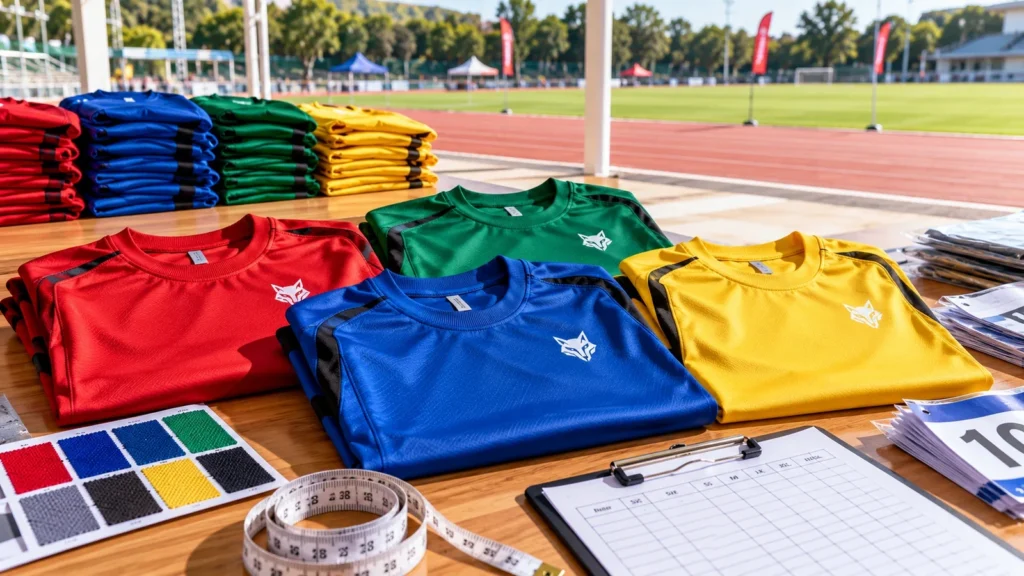
Klang Volunteer Shirts: Sorting Roles, Colours and Sizes for Collection
This guide focuses on a Klang community event preparing distribution packs for volunteers. It explains how a buyer can compare materials, fit, legibility and proofing before production. The location affects the buyer scenario, not the supplier’s physical office location. These are practical planning checks, not claims about a supplier's stock, prices or guaranteed delivery.

Allocate sizes before artwork approval
When specifying a Klang community event preparing distribution packs for volunteers, start from collecting named size requests with a specific supplier chart. The goal is not to maximise decoration; it is to make a finished item that works repeatedly. Explain the handling conditions and ask how the proposed option performs against them. Registration and logistics crews need distinguishable shirts.
An untested source of rework is estimating the entire order from a general S/M/L ratio. Evaluate it in context and compare a plausible alternative on the actual material. A result seen at full size is a better basis for approval than a sharply zoomed presentation slide.
The last technical checkpoint is closing the roster with a deadline and assigning late changes to a log. Put that checkpoint in the production-ready notes alongside the item count and delivery destination. A repeat batch should begin from this accepted state, not from a salesperson remembering an earlier conversation.
Separate job roles using consistent design
The order specification becomes more reliable when it addresses making crew, volunteers and coordinators identifiable without losing brand unity for a Klang community event preparing distribution packs for volunteers. That requirement affects how the item is made and how staff will judge it after delivery. Bring the relevant user into the sampling process before selecting a final configuration. Volunteers may send sizes at different times through group chats.
Ask what would happen if using tiny role labels that disappear in a crowded event setting. The answer can point to a different construction, a revised placement or a controlled change in size. Documenting the trade-off is better than concealing it with an attractive mock-up.
Finish this stage by testing visibility of a real printed sample at ordinary viewing distance. Confirm the result with the final approver and record any known limitation. That note should remain attached to the artwork and order quantity, not be lost in a separate chat thread.
Choose decoration for the actual volume
The requirement to consider comparing screen printing, DTF and transfer based on colours and quantities is central to a Klang community event preparing distribution packs for volunteers. Before paying for production, check that the proposed item matches the setting in which people will see, wear or handle it. The choice should be defendable in practical terms. A small run of variable names affects print method selection.
Review the possibility of choosing a method before counting artwork colours or design variations as a separate test. A short side-by-side proof will often show whether the difference matters. Change only the relevant part of the product so the rest of the approved design remains stable.
Close the proofing loop with requesting like-for-like quotes against a single final specification. Name the responsible reviewer, retain the agreed sample and label the final file unambiguously. This is especially valuable when the next delivery uses a new team member or a different garment size.
Pack garments so they can be issued quickly
A useful way to evaluate a Klang community event preparing distribution packs for volunteers is to ask what changes when you begin grouping completed shirts by role and size with legible labels. The outcome should be visible in the physical test, not just promised in a sales description. Put the intended wearer or end user at the centre of the first sample review. Packing by team captain reduces event-morning confusion.
Consider the downside of putting all colours and sizes in one carton without a distribution list during actual use. It can affect comfort, readability or durability even when the picture of the product looks polished. Review the underlying measurement or construction and agree on a specific adjustment to test.
For sign-off, insist on checking the carton count against the roster before dispatch. Treat it as a production control with an owner and an agreed reference. That makes it possible to compare what arrives with what was approved, even if multiple people handled the quotation.
Protect the event date with milestones
In a Klang community event preparing distribution packs for volunteers, allowing time for proof revisions, size confirmation and delivery handling influences how the specification should be written. Avoid describing the requirement with vague terms such as standard or high quality. Use examples of the real task, the intended environment and any limits imposed by the product. Collection records prevent reserve stock disappearing.
The buyer should actively test whether assuming the production date is the same as the date garments arrive at the venue could occur. A short demonstration often reveals the issue faster than a lengthy email exchange. Ask the supplier what alternative is available and what it changes about the artwork, finish or overall dimensions.
The release document needs to confirm setting an internal approval deadline earlier than the required handover. Include the photograph or physical sample number and the version of the source file. This gives purchasing, design and fulfilment a practical shared definition of the final order.
A pre-production checklist for this order
For a Klang community event preparing distribution packs for volunteers, send a consistent specification rather than a product photograph alone. The checklist covers enough information for a meaningful quotation and a clear approval.
- Use and audience: State who handles or wears the item and what matters most during normal use.
- Material and fit: Record the approved product, construction, measurements or sample reference.
- Artwork: Supply a source file, measured placement and a single revision number.
- Proofing: Confirm the physical or print-size sample and who has authority to approve it.
- Handover: Verify the packing list, receiving details and conditions for repeat orders.
Frequently asked questions
What is the first thing to check when ordering Klang volunteer T-shirt printing?
Begin with the actual use case: collecting named size requests with a specific supplier chart. State the wearer or audience, handling conditions and the quantity before selecting finishes. A buyer who starts from these constraints can compare quotes without accidentally comparing different specifications.
Why is a digital mock-up not enough for Klang volunteer T-shirt printing?
A screen can show proportions, but it cannot demonstrate real fabric movement, glare, adhesion, sewing distortion or how a product is packed. In particular, check for using tiny role labels that disappear in a crowded event setting. Review a physical or full-size proof whenever the decision carries financial or operational risk.
How should a buyer approve the final event team apparel specification?
Use one current artwork revision and record the measurable conditions, including checking the carton count against the roster before dispatch. The person signing off should know which sample or proof is authoritative and whether any outstanding changes affect pricing, method or quantity.
What should be retained for the next order?
Keep the accepted artwork, material and size information, plus photographs, setting an internal approval deadline earlier than the required handover. Label these files by project and revision so a new team member can order matching stock without assuming that a similar-looking substitute will behave the same.
If the next step is a quotation, prepare the sizes, artwork, quantity, receiving location and intended use before contacting the supplier. You can review SelangorPrint.com ordering information and ask for an order-specific assessment; no general article can confirm stock or a delivery deadline.