
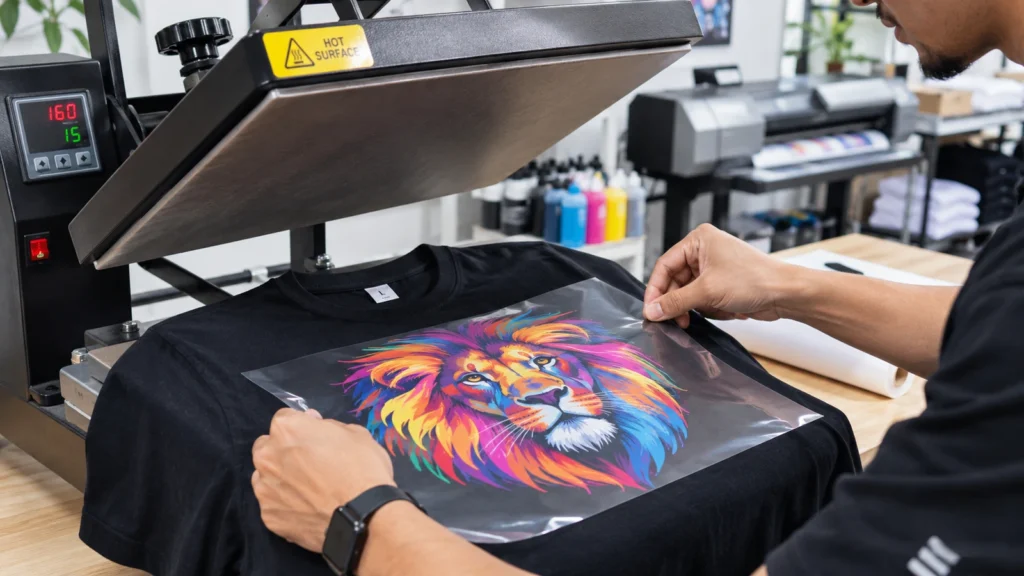
DTF Pressing on Cotton T-Shirts: The Approval Checks That Prevent Misaligned Logos
For a Selangor apparel buyer approving multicolour transfer printing on cotton shirts, an accurate order needs more than an attractive sample photograph. Small details tend to cause the largest problems after distribution, especially when the final item must be repeated for new staff or teams. The five decisions below focus on what to compare, what to measure and which omissions usually cause avoidable rework. For Selangor deliveries or collection, choose the correct receiving address and confirm arrangements at the quoted location before staff travel or allocate unloading time.
Create fixed placement coordinates
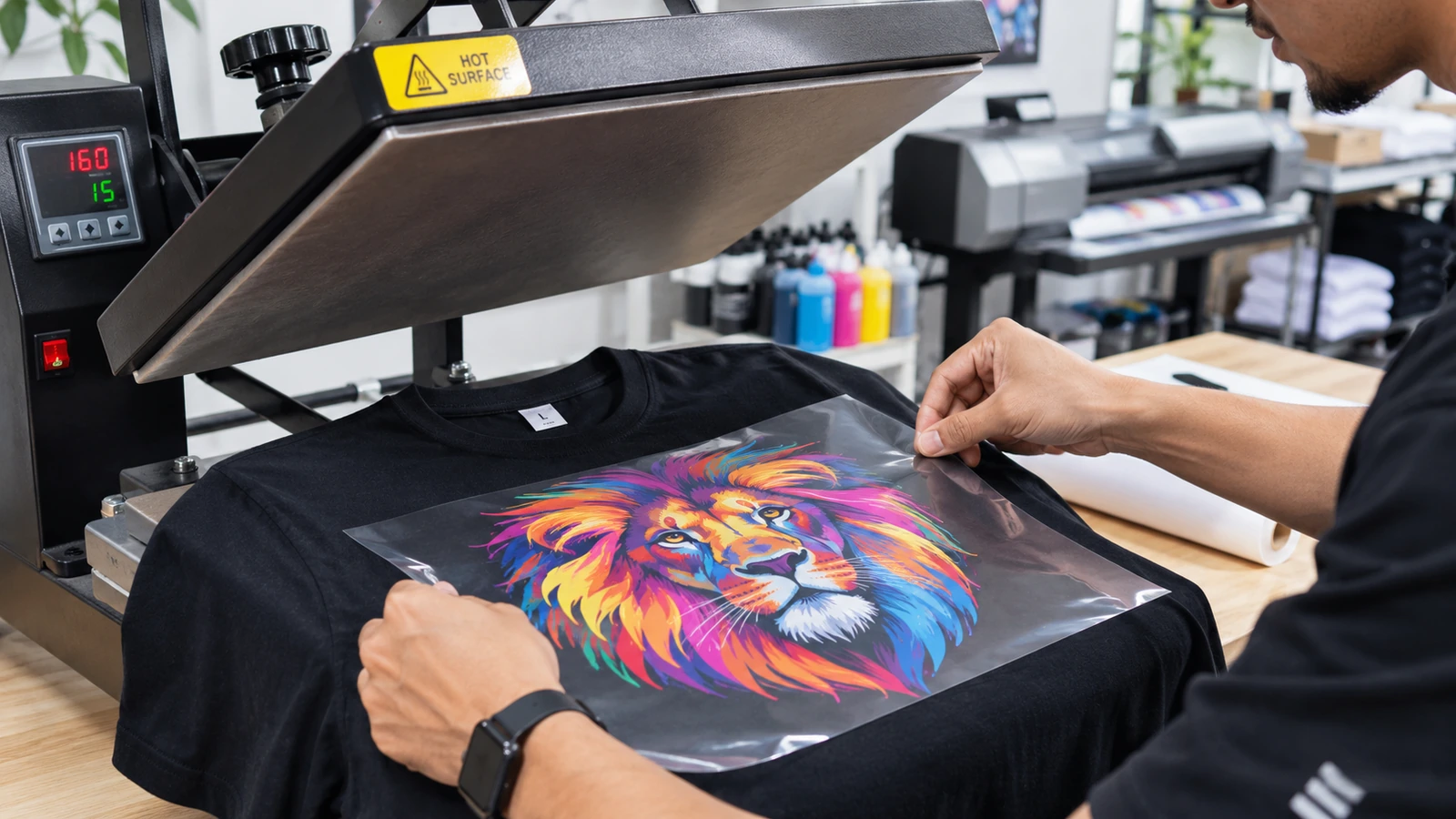
The logo should be positioned from stable garment landmarks, not by a hurried visual guess. For a Selangor apparel buyer approving multicolour transfer printing on cotton shirts, this affects both the finished appearance and the way the order can be checked after delivery. DTF transfer work depends on the transfer material, the blank garment and the pressing process. A supplier should evaluate all three together. Ask for the relevant material, dimensions or artwork details rather than an unsupported assurance of quality.
Write the distance below the neckline and from the garment centreline on the sample sheet. Keep a dated photograph or annotated sample with the sign-off rather than relying on memory. Small alignment differences become obvious in a uniform batch. Document what was checked and keep the proof alongside the order. A verbal agreement is much harder to audit when another batch is needed.
Assess the finished transfer dimensions
Before choosing a specification, look at the role that the item must perform. A wide design may cross the chest curve or run into a size-dependent seam area. Design approval should happen at finished print size. Fine lettering and negative space can look convincing while enlarged on a monitor but fail in use. Treat this as a physical requirement whenever a screen image cannot show the relevant finish.
Place a full-size paper proof on the smallest and largest garments. The same check should be used on the actual garment or print model proposed for production. A transfer copied from one size can overpower another. This is especially useful for a mixed group, where the smallest garment or most demanding role may reveal issues a standard sample does not.
Check cotton surface and shrinkage
Before choosing a specification, look at the role that the item must perform. Different cotton knits can behave differently under heat and washing. Dark and light blanks may need different colour or underbase decisions. Compare actual pressed samples rather than solely using digital mock-ups. A practical quotation should make this choice visible, so competing suppliers are pricing the same item.
Pre-test the intended garment model and follow the transfer supplier’s process instructions. Keep a dated photograph or annotated sample with the sign-off rather than relying on memory. Assuming universal press settings can cause incomplete adhesion or scorching. This is especially useful for a mixed group, where the smallest garment or most demanding role may reveal issues a standard sample does not.
Inspect small text and negative space
A common gap in the initial brief is inspect small text and negative space. Fine logo components may print but become difficult to read after pressing on a textured shirt. A large solid print often feels less flexible than a broken-up graphic. Consider the intended use and the wearer’s comfort before choosing coverage. Ask for the relevant material, dimensions or artwork details rather than an unsupported assurance of quality.
Compare a transfer proof with the original artwork under good lighting. Keep a dated photograph or annotated sample with the sign-off rather than relying on memory. A tiny disconnected detail may lift sooner than a well-supported line. If the result is marginal, change the specification now rather than asking the production team to improvise during the final run.
Approval and order checklist
Before the final approval, ask one person who was not involved in the artwork preparation to follow the same checklist and locate the evidence for every item. For a Selangor apparel buyer approving multicolour transfer printing on cotton shirts, the final record should identify the selected product or material, the artwork version, the exact quantity by variant, and the receiving address or responsible collector. A sample is useful only if it corresponds to the version that will be made.
- Write the distance below the neckline and from the garment centreline on the sample sheet.
- Place a full-size paper proof on the smallest and largest garments.
- Pre-test the intended garment model and follow the transfer supplier’s process instructions.
- Compare a transfer proof with the original artwork under good lighting.
- Wash and dry a test piece to the garment label instructions before sign-off.
For Selangor deliveries or collection, choose the correct receiving address and confirm arrangements at the quoted location before staff travel or allocate unloading time. Retain the supplier reply, signed sample images and dated item list for replacements or later batches. If a requested change affects garment sizing, decoration or packing, ask for the revised specification before approving production, rather than treating it as an informal message.
Frequently asked questions
Does DTF suit every design?
The logo should be positioned from stable garment landmarks, not by a hurried visual guess. Write the distance below the neckline and from the garment centreline on the sample sheet. Small alignment differences become obvious in a uniform batch. Keep the final decision in the approved order so that a later team member can check it without guessing.
Why does print placement vary by shirt size?
A wide design may cross the chest curve or run into a size-dependent seam area. Place a full-size paper proof on the smallest and largest garments. A transfer copied from one size can overpower another. Keep the final decision in the approved order so that a later team member can check it without guessing.
What should a production sample demonstrate?
Different cotton knits can behave differently under heat and washing. Pre-test the intended garment model and follow the transfer supplier’s process instructions. Assuming universal press settings can cause incomplete adhesion or scorching. Keep the final decision in the approved order so that a later team member can check it without guessing.