
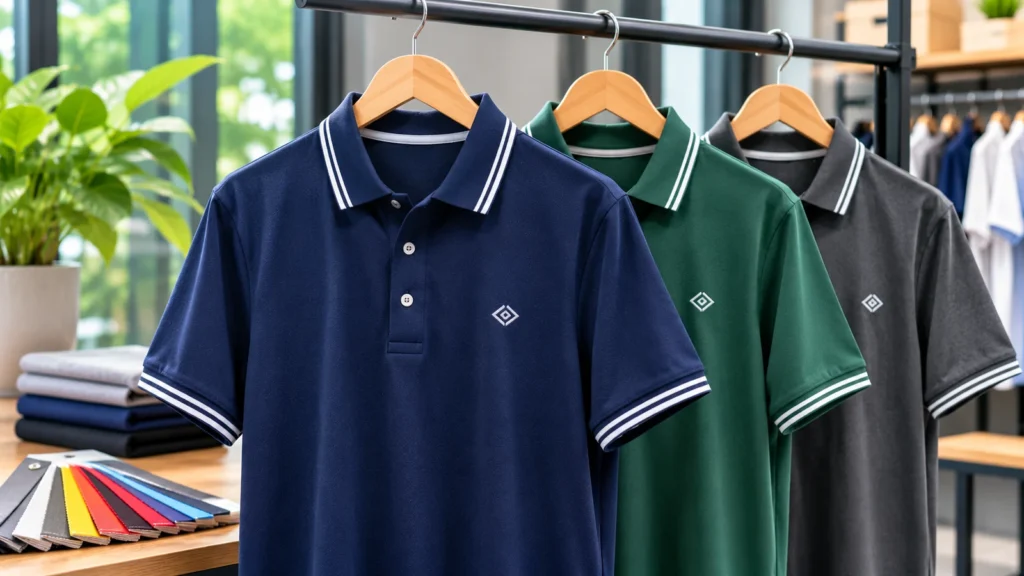
Puchong Sales-Team Polos: Colour-Coding Departments While Keeping One Brand
Puchong Sales-Team Polos: Colour-Coding Departments While Keeping One Brand is fundamentally a practical specification problem for a Puchong sales manager coordinating customer-facing and support teams. A reliable purchase is a sequence of decisions: what will be used, what will be measured, what will be proved and who will approve it. The aim is to choose a result that the actual users can accept and the supplier can reproduce. For Selangor deliveries or collection, choose the correct receiving address and confirm arrangements at the quoted location before staff travel or allocate unloading time.
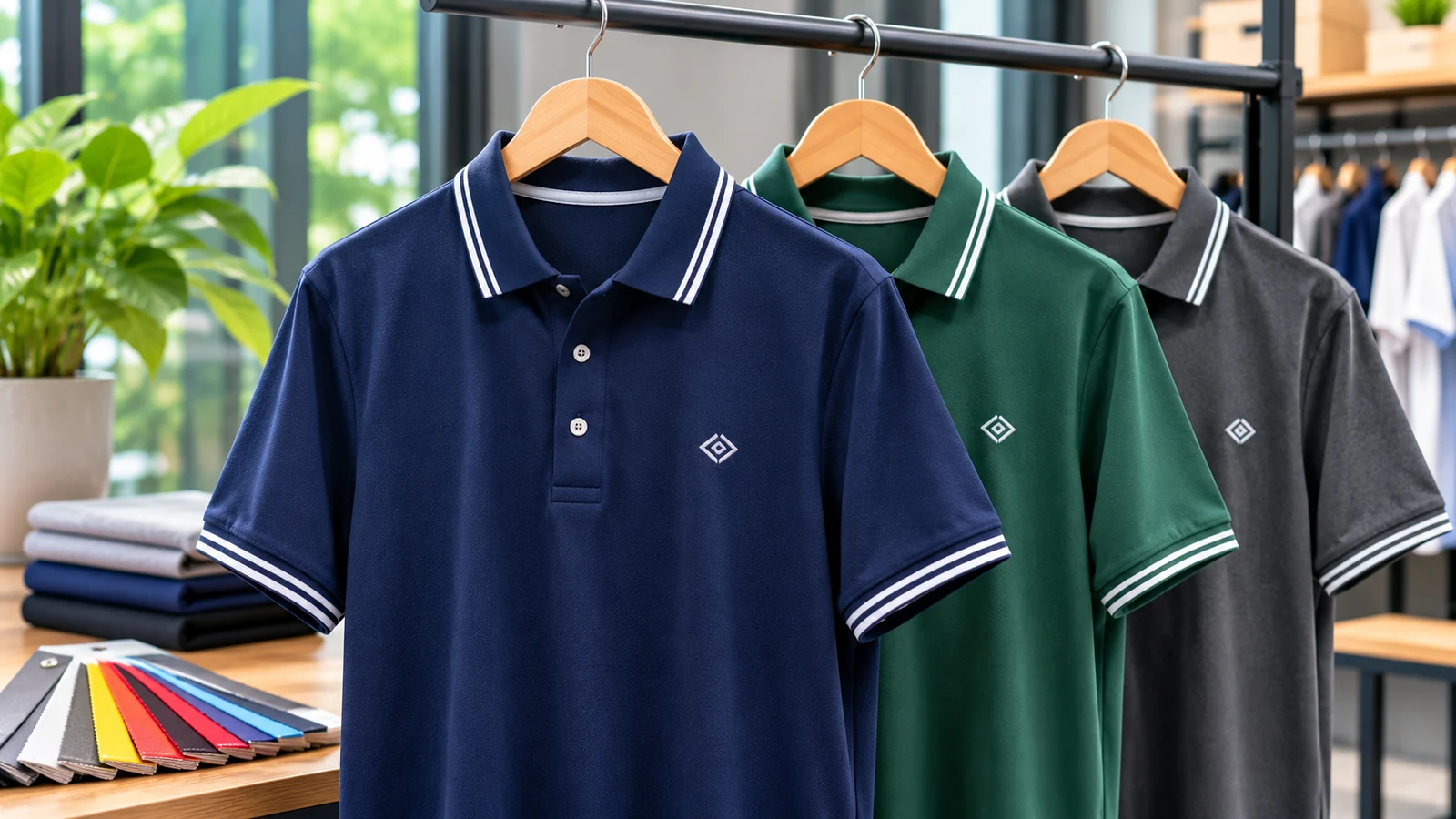
Set one master brand colour
Department accents should complement the primary identity rather than become independent uniforms. This becomes important when approval comes from an administrator but the finished item is worn or handled by someone else. Check whether the chosen model has a structured or soft collar, a stable placket, and side seams that move comfortably. These details influence how a staff uniform looks after hours of use. This distinction is useful for both first-time orders and replacements to an existing uniform programme.
Place the proposed polos together and compare collar, body and trim shades. Ask an independent reviewer to compare the proof against the original requirement. A colour name such as royal blue can vary widely between suppliers. This is especially useful for a mixed group, where the smallest garment or most demanding role may reveal issues a standard sample does not.
Keep the logo constant across variants
The embroidered or printed brand mark should retain its approved proportions and safe-space on every shirt. For a Puchong sales manager coordinating customer-facing and support teams, this affects both the finished appearance and the way the order can be checked after delivery. Knit structure matters. Piqué, interlock and smooth polyester can differ in texture, opacity and drape even when suppliers use the same broad product category. A practical quotation should make this choice visible, so competing suppliers are pricing the same item.
To remove ambiguity, use one measured placement guide for each garment model. Save the answer in the final purchase record. Changing artwork scale informally weakens visual consistency. This is especially useful for a mixed group, where the smallest garment or most demanding role may reveal issues a standard sample does not.
Test the uniform in customer contact
A good team polo should sit neatly during showroom conversations and feel comfortable when travelling to clients. This becomes important when approval comes from an administrator but the finished item is worn or handled by someone else. A realistic test uses the actual garment size and ordinary staff movement. Neck opening, armhole ease and hem rise often become obvious only when the shirt is worn. A practical quotation should make this choice visible, so competing suppliers are pricing the same item.
Ask staff to try seated, walking and carrying-sample activities. Ask an independent reviewer to compare the proof against the original requirement. A tight underarm or short hem will distract during ordinary work. Document what was checked and keep the proof alongside the order. A verbal agreement is much harder to audit when another batch is needed.
Decide whether department marks are needed
A common gap in the initial brief is decide whether department marks are needed. Some groups benefit from a small label, while others can rely on name badges or roles already visible. Embroidery forms stitches in the cloth, while a print places a graphic on the surface. Their effects on drape and feel depend on the garment, size and design. Ask for the relevant material, dimensions or artwork details rather than an unsupported assurance of quality.
Run a short staff feedback session before adding more decoration. The same check should be used on the actual garment or print model proposed for production. Too many stitched labels increase cost and clutter. An explicit pass/fail observation gives both buyer and supplier a clearer basis for revising artwork, sizing or finishing.
Approval and order checklist
Before the final approval, ask one person who was not involved in the artwork preparation to follow the same checklist and locate the evidence for every item. For a Puchong sales manager coordinating customer-facing and support teams, the final record should identify the selected product or material, the artwork version, the exact quantity by variant, and the receiving address or responsible collector. A sample is useful only if it corresponds to the version that will be made.
- Place the proposed polos together and compare collar, body and trim shades.
- Use one measured placement guide for each garment model.
- Ask staff to try seated, walking and carrying-sample activities.
- Run a short staff feedback session before adding more decoration.
- Save a physical reference and dated approval notes.
For Selangor deliveries or collection, choose the correct receiving address and confirm arrangements at the quoted location before staff travel or allocate unloading time. Retain the supplier reply, signed sample images and dated item list for replacements or later batches. If a requested change affects garment sizing, decoration or packing, ask for the revised specification before approving production, rather than treating it as an informal message.
Frequently asked questions
How do we choose the right polo model?
Department accents should complement the primary identity rather than become independent uniforms. Place the proposed polos together and compare collar, body and trim shades. A colour name such as royal blue can vary widely between suppliers. Keep the final decision in the approved order so that a later team member can check it without guessing.
Is a digital garment mock-up enough?
The embroidered or printed brand mark should retain its approved proportions and safe-space on every shirt. Use one measured placement guide for each garment model. Changing artwork scale informally weakens visual consistency. Keep the final decision in the approved order so that a later team member can check it without guessing.
What makes a repeat order consistent?
A good team polo should sit neatly during showroom conversations and feel comfortable when travelling to clients. Ask staff to try seated, walking and carrying-sample activities. A tight underarm or short hem will distract during ordinary work. Keep the final decision in the approved order so that a later team member can check it without guessing.