
Decorating High-Visibility Vests Without Interfering With Reflective Tape
Businesses may want a company name or department badge on a high-visibility vest, but safety garments require a different approval process from ordinary polos. A bright base fabric does not prove compliance, and printing over reflective material may undermine the product’s tested performance. This guide explains the practical checks a buyer should make before treating the vest as advertising space.
Confirm the underlying safety garment first
Ask the employer’s safety representative which visibility standard and class apply to the worksite. Review the manufacturer’s certificate and garment model rather than assuming all fluorescent vests are interchangeable. The effective surface area of background and retroreflective material can be important. Decoration should not be planned until these constraints are understood.
For the purchase approval, get the manufacturer’s written guidance for custom marking or alteration. This is worth recording before the design is signed off, because a logo can unintentionally change the certified garment even when it looks professionally applied.
Identify prohibited tape and seam areas
Map every reflective band, closure, high-stress seam and pocket on the physical vest. Keep decoration clear of tape and any other protected area defined by the garment specification. Large back panels may look attractive in a mockup, but their size and position must be checked against visibility requirements. Do not infer a safe zone merely from empty-looking space.
A useful verification step is to mark possible logo positions on a photo only after verifying manufacturer rules. The practical reason for that check is that a transfer that masks tape can compromise night-time conspicuity and certification.
Evaluate print adhesion and heat carefully
Heat-transfer processes use temperature, pressure and dwell time, which may affect reflective tape, coatings or lightweight safety fabrics. Ask the supplier what process is compatible with the specific garment and whether the maker permits it. A neat transfer sample does not by itself validate safety performance. When uncertain, choose a manufacturer-approved personalisation option.
During the production review, require compatibility evidence before applying heat to a certified garment. Skipping this step can cause a surprisingly expensive problem: an attractive print is not acceptable if the process damages nearby reflective elements.
Make role identification concise
Simple department names or staff IDs can be useful, but text must remain readable and should not crowd functional visibility areas. Confirm any permitted size and position, and avoid placing a dense dark rectangle simply because it maximises contrast. A badge may also need to be removable or independent of the certified vest depending on the application.
The team should also review legibility under site lighting without compromising protected surfaces. Treat this as part of the specification rather than an informal preference, since oversized branding can distract from or reduce necessary visibility properties.
Inspect a complete finished sample
A sample review should include front, back, closure access, reflective component condition, stitch or print adhesion and correct garment identification. Ask the workplace safety officer to approve the exact finished item before volume production. Keep the original manufacturer information with the decorated sample for later inspections.
Before a supplier prepares the final proof, record the approved model, permitted positions and any conditions on use. The risk is operational as much as visual: an approval based only on a design file omits the effects of production.
Maintain issued garments correctly
Employees should follow the actual care label and inspect dirt, damage and worn reflective tape. A printed logo does not extend the service life of a vest. Set a replacement process based on manufacturer and worksite rules, and keep reorders on the same approved specification unless alternatives are reassessed.
For a repeat order, train staff to report tape damage and avoid unapproved ironing over reflective components. Keep the result with the approved sample, since continued use after loss of visibility or garment damage can defeat the original safety purpose.
Practical example: making the decision
A warehouse operator wants to add its company mark to certified high-visibility vests. The first draft places a large transfer across the back tape because that is the easiest part of the mockup to see. The safety team checks the vest's documentation and rejects the position. The buyer consults the manufacturer and decoration supplier about any permitted location and process, explicitly checking whether heat exposure would affect the garment. A fully finished test item is inspected by the responsible safety officer before bulk production is considered. The clothing issue record continues to identify the underlying certified model rather than referring to it as a generic orange vest. This hypothetical workflow shows why a successful-looking print cannot substitute for evidence of suitability, and why no standard or protection class should be invented for an unverified garment.
Additional approval considerations
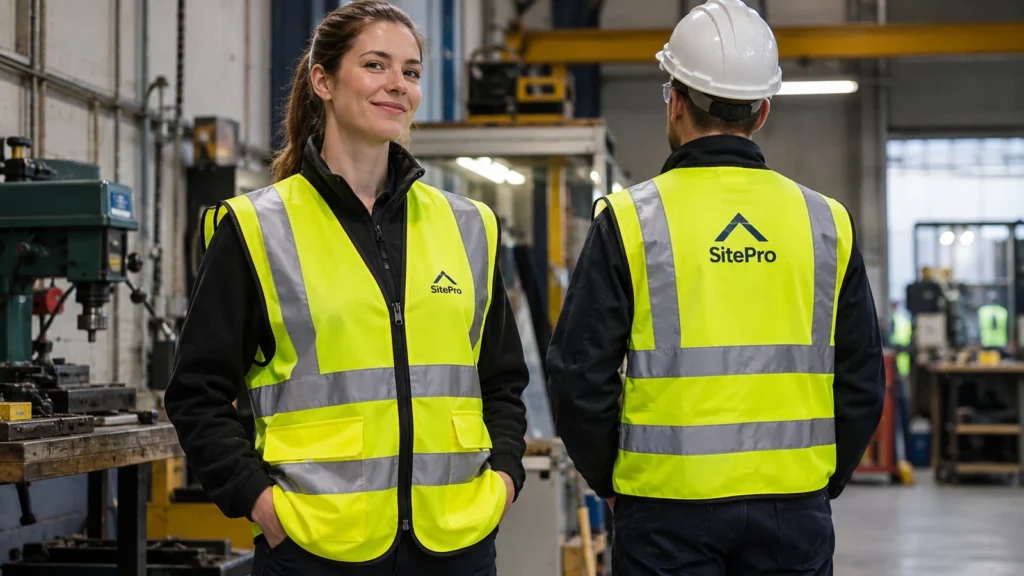
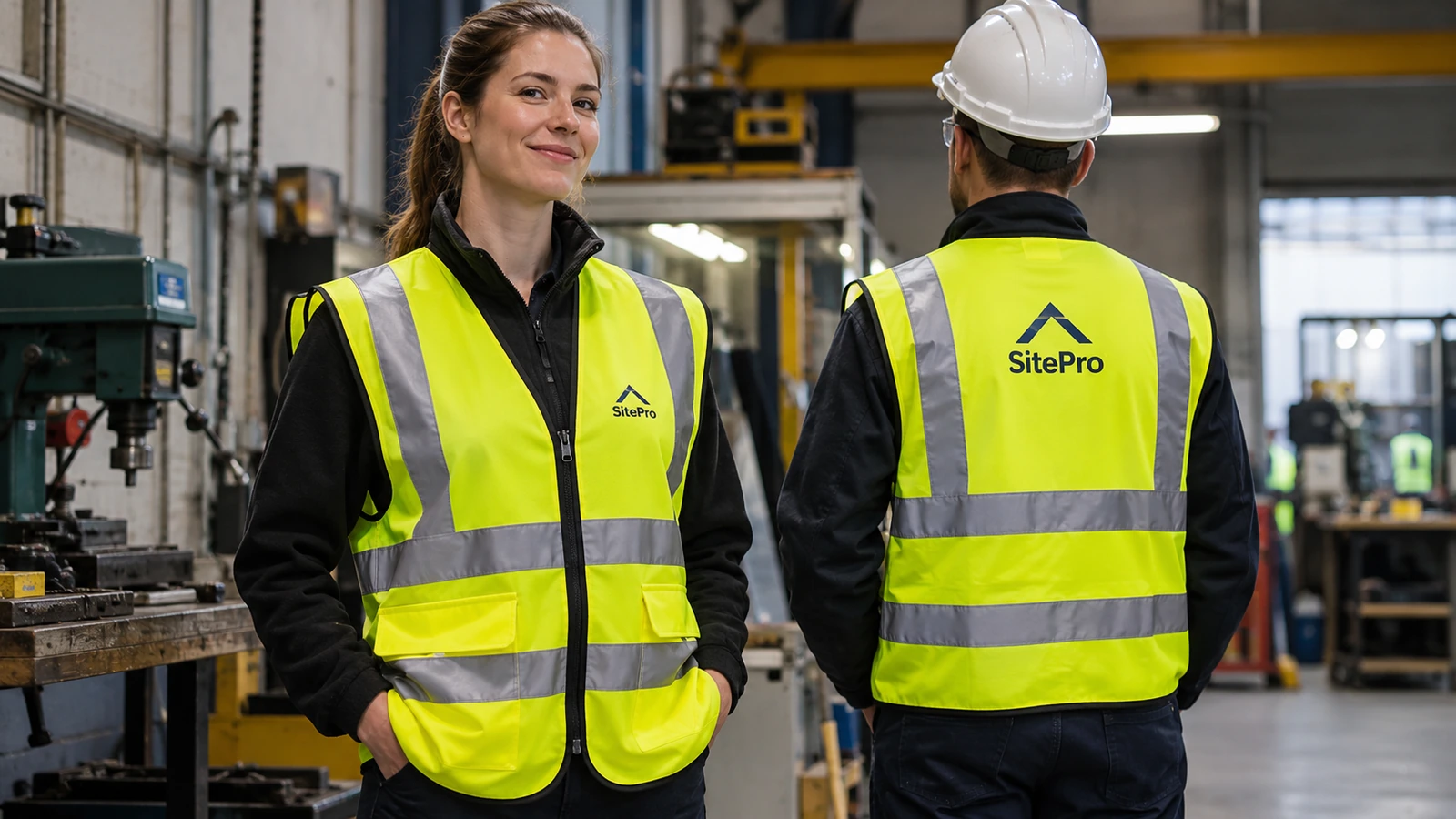
A finished branded safety garment should never be used to suggest a tested protection class that has not been verified. The article's product photos are illustrative; decisions must come from the actual vest manufacturer's documentation and the employer's risk assessment. If a process is not approved, a different garment or separate identification solution may be required.
The approval record should explicitly identify who reviewed the safety impact and what restrictions apply. A generic “artwork approved” message from marketing is insufficient. Keep decorated and undecorated reference items if practical, so later inspections can compare the original configuration with the authorised finished result.
- Get the manufacturer’s written guidance for custom marking or alteration.
- Mark possible logo positions on a photo only after verifying manufacturer rules.
- Require compatibility evidence before applying heat to a certified garment.
- Review legibility under site lighting without compromising protected surfaces.
- Record the approved model, permitted positions and any conditions on use.
- Train staff to report tape damage and avoid unapproved ironing over reflective components.
An additional control is to get the manufacturer’s written guidance for custom marking or alteration. Combine that check with a final handover step: train staff to report tape damage and avoid unapproved ironing over reflective components. Keep both results with the dated approval sample so a replacement order uses the same reference. Where the material, delivery address or production technique changes, ask for a fresh confirmation rather than assuming that an old quotation covers the new combination.
Frequently asked questions
Can a DTF logo go on any safety vest?
No. Garment material, heat compatibility, certification and manufacturer permissions must be verified.
Can I cover reflective stripes with a company logo?
Do not cover protected areas without explicit qualified approval; normally they should remain clear.
Is a bright orange fabric automatically certified?
No. Check the complete garment’s applicable standard and documentation.
Who should approve the final design?
The employer’s safety representative and qualified supplier, based on the exact garment.
For a quotation based on the actual garment, print method, quantity and delivery location, review SelangorPrint services and use the official enquiry page. Prices, methods, production schedules and minimum quantities must be confirmed for the specific job.