
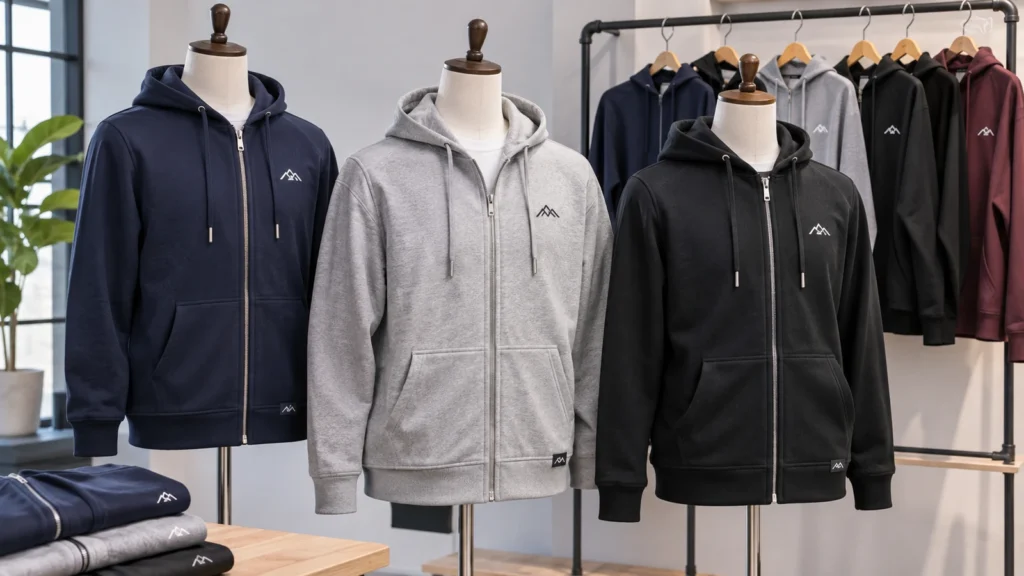
Hybrid Office and Warehouse Hoodies: Fitting Samples for Mixed Roles
A shared company hoodie can unify employees who spend their days in very different environments. Office staff may value a tidy silhouette, while warehouse support teams need room to move and layer clothing. The right buying process avoids choosing a garment for one group and expecting everyone else to adapt. This guide uses representative sample testing to balance comfort, presentation and workable stocking.
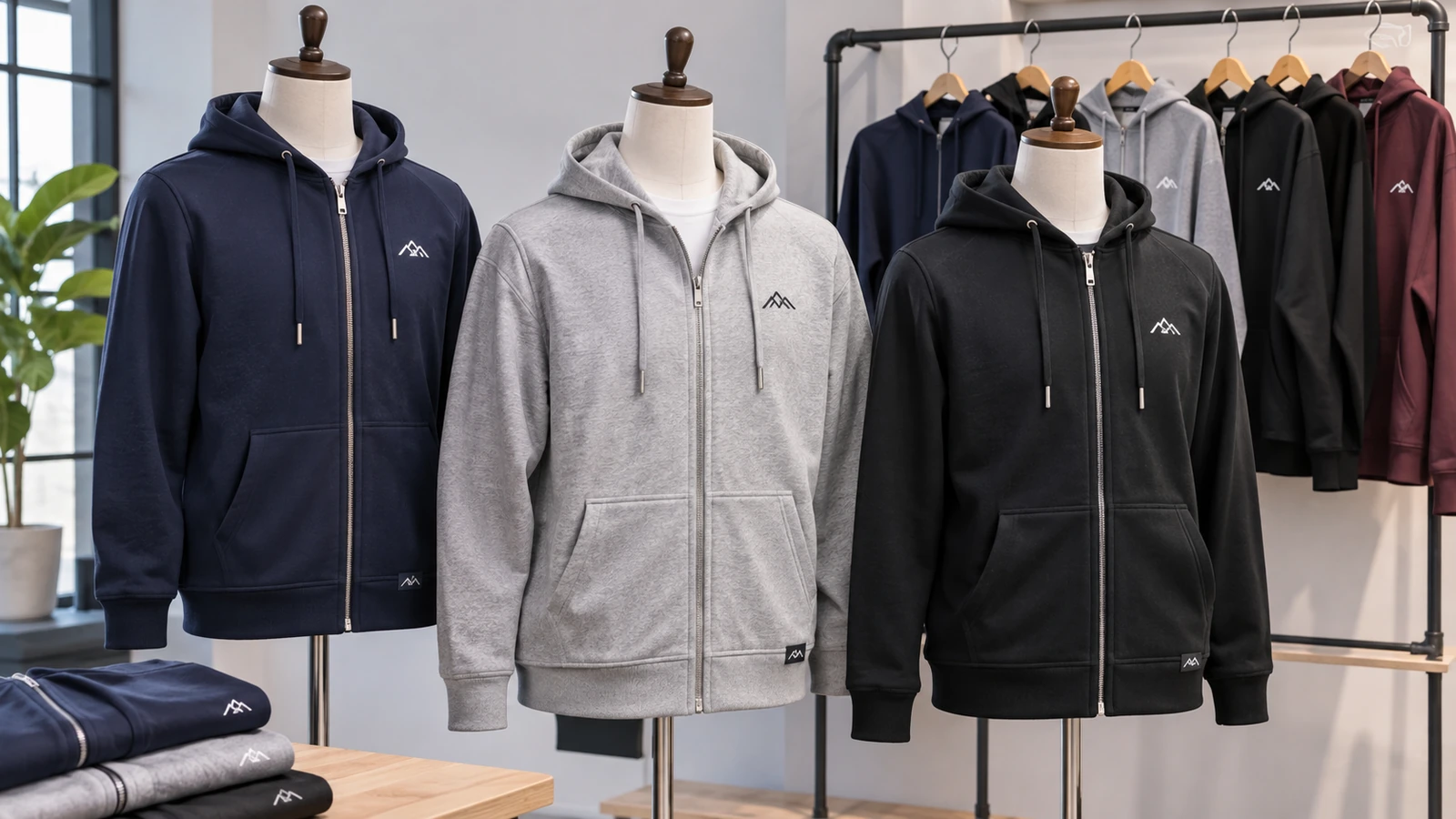
Create a role-based wear specification
List where the hoodie may be worn and whether employees need to change layers during the day. A casual hoodie is not automatically appropriate around moving machinery or other regulated work areas. Check workplace rules before purchase. For permitted roles, note whether staff typically wear a polo, T-shirt or long sleeve beneath the garment.
For the purchase approval, ask supervisors to approve intended use areas before selecting colours or logos. This is worth recording before the design is signed off, because a comfortable general-purpose hoodie can conflict with worksite clothing requirements.
Choose representative fitting testers
Select staff with different shoulder widths, arm lengths and body proportions instead of relying only on one sample fit. Include workers who wear an underlayer and office staff who prefer a slimmer line. Evaluate bending, reaching, sitting and zip operation. A successful size distribution is based on the garment’s measurements, not a universal S–3XL assumption.
A useful verification step is to document each tester’s selected garment measurements, not their personal health details. The practical reason for that check is that a bulk buy based on one mannequin may leave some teams with sleeves or hems that interfere.
Assess full zip, cuffs and pockets together
A zip hoodie allows temperature adjustment but can bring fabric and hardware into the logo area. Check whether the zip waves when closed and whether pockets hold their shape with objects inside. Ribbed cuffs should recover after movement without squeezing. The garment should also hang tidily when employees are seated.
During the production review, have testers repeat common activities while the garment is zipped and unzipped. Skipping this step can cause a surprisingly expensive problem: a style chosen only for photographs may feel restrictive during normal work.
Approve branding on a finished sample
A small chest emblem may work on a full zip style if it clears the opening and pockets. A large back print must be reviewed with the hood both raised and lowered, since the hood can obscure top lettering. Embroidery, DTF and other methods differ in feel and restrictions. Do not extrapolate from a flat artwork mockup.
The team should also inspect final-size branding on a garment in more than one sample size. Treat this as part of the specification rather than an informal preference, since an oversized emblem can distort the body fabric or disappear behind the hood.
Test washing and wear across departments
A hoodie may be washed more frequently by an active support team than by an office employee. Check the care label, sample laundering behaviour, cuff recovery and whether decoration remains acceptable. Keep a spare item for worksite trial and document its condition after real use. Avoid assuming a heavier hoodie is always more durable.
Before a supplier prepares the final proof, choose a realistic care test based on the supplied garment and print method. The risk is operational as much as visual: a fabric that pills early or shrinks can change fitting results after the initial issue.
Plan spares and future replacement sizes
Combine fit-test results with actual headcount and expected staff changes. Track preferred sizes, selected model, fabric shade and logo revision so reorders match the issue batch. A small buffer may be sensible for common sizes, but the quantity should follow turnover and replenishment lead time. Confirm availability before promising everyone the same garment model indefinitely.
For a repeat order, freeze one approved specification and communicate it to every department manager. Keep the result with the approved sample, since independent departmental purchases can create visible inconsistency in the shared uniform programme.
Practical example: making the decision
A mixed office-and-warehouse support team needs a shared zip hoodie for approved work areas. The buyer asks six staff members to test garments over their usual underlayers, recording how shoulders, cuffs and zip behave while standing, reaching and sitting. One sample has an oversized logo that folds near a pocket, so the print is reduced and moved to a better position. The safety lead confirms that these hoodies are not permitted for certain machine-adjacent tasks. A washed sample is inspected for cuff recovery and pilling before final quantity approval. The size list identifies common replacements and avoids equal allocations across every size. The purchase file combines style, permitted use, logo revision and care details, creating a more reliable repeat-order reference than a single promotional photograph.
Additional approval considerations
A hoodie programme needs a replacement plan for zips and cuffs as well as a design approval. These are frequent points of user contact, particularly for staff removing and putting on layers through the day. Inspect workmanship and spare model availability before committing to a shade that might disappear from the supplier's catalogue.
To manage mixed roles fairly, define what counts as an acceptable fit rather than demanding a single fashionable silhouette. A garment can look slightly looser on one person and still meet mobility and presentation requirements. Document the approved range of fit using real sample measurements, not personal judgements about employee appearance.
- Ask supervisors to approve intended use areas before selecting colours or logos.
- Document each tester’s selected garment measurements, not their personal health details.
- Have testers repeat common activities while the garment is zipped and unzipped.
- Inspect final-size branding on a garment in more than one sample size.
- Choose a realistic care test based on the supplied garment and print method.
- Freeze one approved specification and communicate it to every department manager.
An additional control is to ask supervisors to approve intended use areas before selecting colours or logos. Combine that check with a final handover step: freeze one approved specification and communicate it to every department manager. Keep both results with the dated approval sample so a replacement order uses the same reference. Where the material, delivery address or production technique changes, ask for a fresh confirmation rather than assuming that an old quotation covers the new combination.
Frequently asked questions
Should a hoodie fit over a polo?
Test it over the exact underlayer employees intend to wear.
Can warehouse staff always wear hoodies?
Only where the workplace’s task and safety policies allow them.
Is a full-zip hoodie easier to brand?
It offers useful placement options but adds zip and pocket constraints.
How should reorders be controlled?
Keep the approved garment SKU, physical sample and artwork revision.
For a quotation based on the actual garment, print method, quantity and delivery location, review SelangorPrint services and use the official enquiry page. Prices, methods, production schedules and minimum quantities must be confirmed for the specific job.