
Klang Brand Blue Reorders: Keeping Print and Uniform Colours Coordinated
A company in Klang might print new name cards, replenish polo shirts and prepare a display backdrop using the same blue brand identity. These items will not reproduce colour in exactly the same way. Papers, garment dye, embroidery thread and print films reflect light differently. The practical objective is to manage approved equivalents and prevent surprise changes from one purchase order to the next.
Decide which brand blue is the master reference
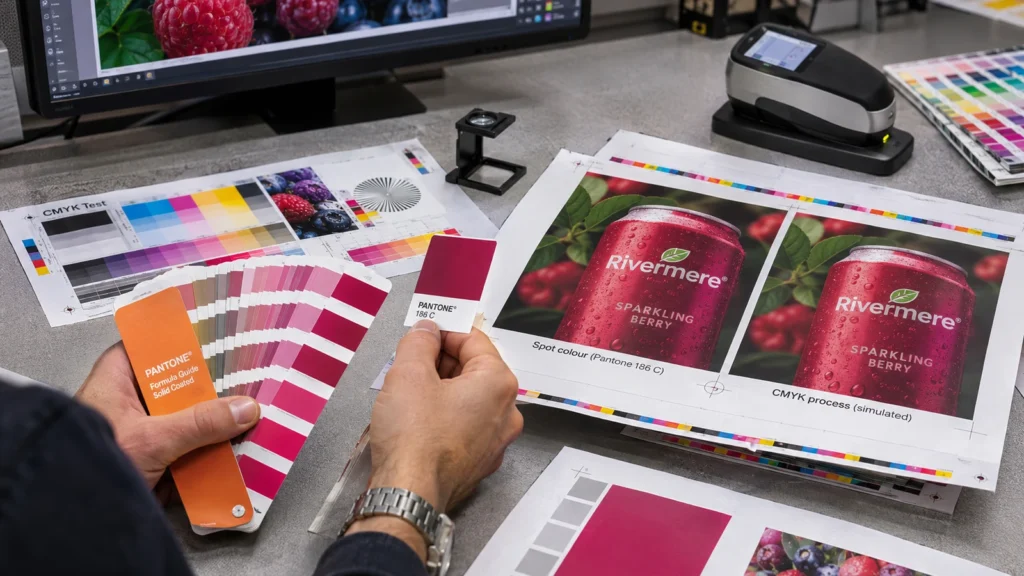
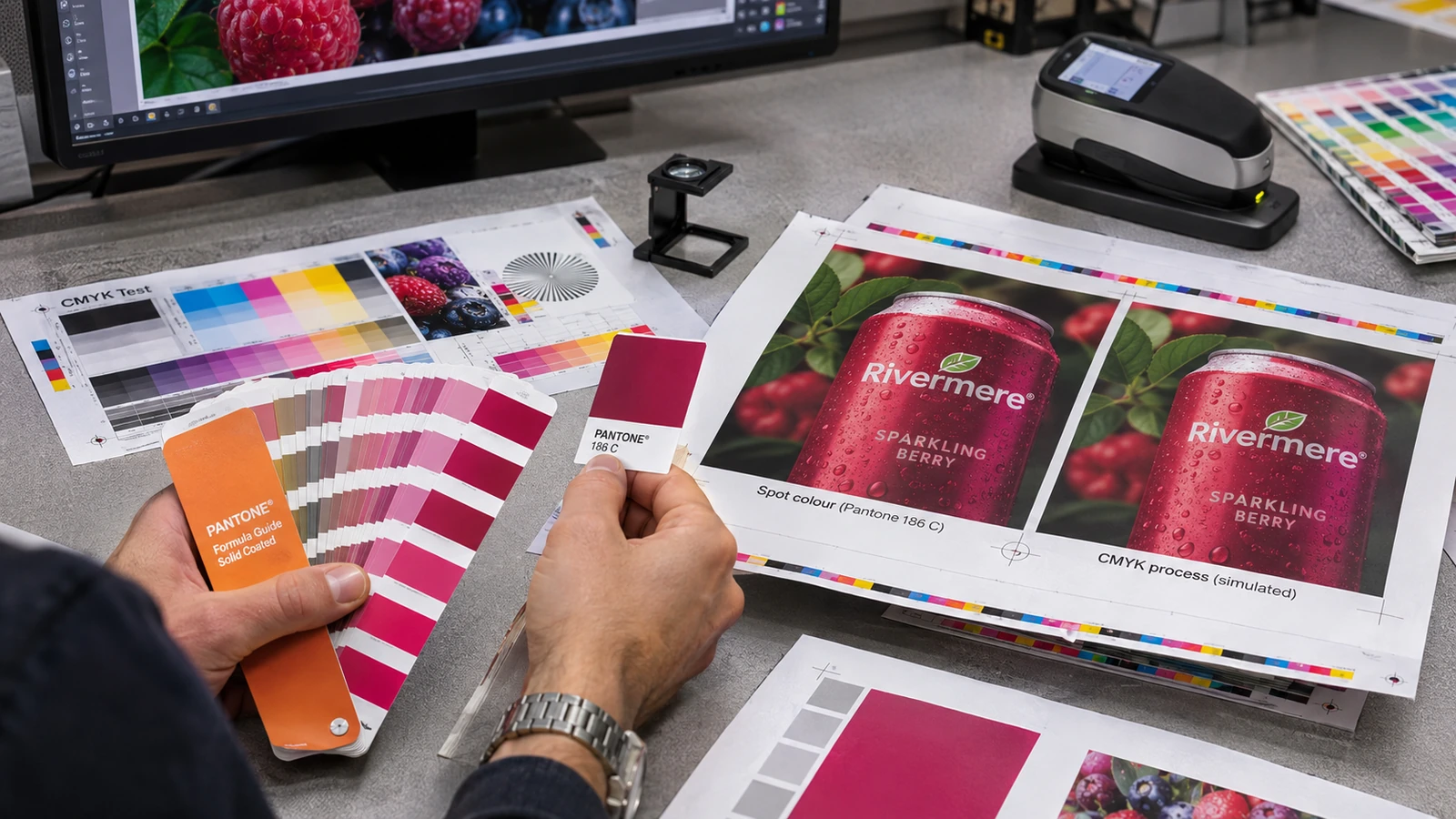
Start with the official artwork and the business’s existing approved physical samples. Identify whether a Pantone reference, printed sheet or original garment is authoritative. A colour viewed on a laptop is not a dependable physical standard. Set an acceptable visual range if exact matching is not technically achievable across different substrates.
For the purchase approval, bring samples together in consistent light and nominate the closest approved reference. This is worth recording before the design is signed off, because different departments may each remember a different “original blue” and approve incompatible shades.
Separate paper print from fabric print
CMYK paper printing, DTF heat transfer, screen printing and embroidery do not share the same material colour limits. A corporate blue may look flatter on uncoated paper and shinier in embroidery thread. Ask how each process will translate the reference. The supplier can discuss practical options, but no single colour number promises identity across every medium.
A useful verification step is to compare a production sample of each technique beside the master standard. The practical reason for that check is that a supplier may follow the technical process correctly while the result looks inconsistent to the buyer.
Check the base shirt shade before logo colours
A logo that stands out on a white shirt may require a different contrast approach on navy. Even similar navy blanks can come from different dye batches or brands. Record the base garment model, fabric and colour code, then decide how the decorative emblem should look against it. Approval should cover the full garment, not only a detached transfer.
During the production review, inspect the logo at normal wearing distance on the actual proposed polo. Skipping this step can cause a surprisingly expensive problem: changing the shirt shade without revisiting logo contrast may reduce readability.
Watch the finishing and lighting effects
Lamination can make a paper blue appear more saturated or reflective, while a textured garment can scatter light. Compare samples under neutral light and also under the environment where they will be used. A showroom spotlight can mask subtle shifts that become obvious under daylight. Avoid using messaging-app photographs as the final standard.
The team should also record stock, coating, print method and viewing conditions with the approved sample. Treat this as part of the specification rather than an informal preference, since an “approved blue” without the original material can be impossible to reproduce reliably.
Keep production approvals versioned
The master artwork, converted print file, embroidery stitch sample and final decorated polo should each have a clear revision. A small change to stroke width or contrast may be justified for a different production method, but it should be recorded. Ensure the quotation identifies whether a physical proof is included and when additional approval is required.
Before a supplier prepares the final proof, store a dated approval pack available to purchasing and marketing teams. The risk is operational as much as visual: an old logo screenshot can silently replace the correct vector file in the next order.
Build a cross-product reorder checklist
For each paper or apparel item, preserve supplier, SKU, material, colour specification, finish, artwork version, production process and authorised contact. Ask SelangorPrint to confirm whether the proposed production combination is currently offered. Reinspect a sample if the stock or method changes rather than treating a repeat order as automatically identical.
For a repeat order, schedule an annual review of physical master samples and current product availability. Keep the result with the approved sample, since a minor unrecorded change can spread across stationery, shirts and events over several months.
Practical example: making the decision
A Klang business uses the same dark blue on warehouse polos, business cards and an exhibition display. Purchasing receives separate quotations and each team assumes that the familiar RGB logo will reproduce identically on every product. Before approving, marketing identifies an approved paper sample and garment reference, then asks each supplier to state how it will approximate the blue. The embroidered thread is evaluated beside a printed transfer, while card stock and lamination are compared under the same lighting. The company allows documented material-based variation but maintains strict legibility and logo-shape rules. Each order gets an artwork revision and reference photo with material details. A future brand refresh can now be implemented deliberately instead of accumulating several untracked blues across departments.
Additional approval considerations
Printed colour management is also a responsibility shared by purchasing and brand owners. A supplier can recommend technical conversions, but the customer must decide which physical result is commercially acceptable. Make that decision while samples are inexpensive rather than waiting until a bulk batch arrives. The approval should name the person authorised to accept controlled variations.
When multiple print suppliers are involved, use a consistent reference kit rather than forwarding a succession of old screenshots. Record whether a paper sample is coated or uncoated and whether a fabric sample is embroidered or transfer-printed. The more precise the reference, the easier it is to distinguish an actual production defect from a normal material difference.
- Bring samples together in consistent light and nominate the closest approved reference.
- Compare a production sample of each technique beside the master standard.
- Inspect the logo at normal wearing distance on the actual proposed polo.
- Record stock, coating, print method and viewing conditions with the approved sample.
- Store a dated approval pack available to purchasing and marketing teams.
- Schedule an annual review of physical master samples and current product availability.
An additional control is to bring samples together in consistent light and nominate the closest approved reference. Combine that check with a final handover step: schedule an annual review of physical master samples and current product availability. Keep both results with the dated approval sample so a replacement order uses the same reference. Where the material, delivery address or production technique changes, ask for a fresh confirmation rather than assuming that an old quotation covers the new combination.
Frequently asked questions
Can CMYK match an embroidered blue exactly?
A visual approximation may be possible, but different media cannot guarantee identical appearance.
Should a brand guide include fabric samples?
A physical approved sample can improve future cross-material decisions.
Can colour be approved from a phone photograph?
Use photos for layout, not critical colour approval.
What changes require a new proof?
Changes to base material, finish, decoration process or important colour references.
For a quotation based on the actual garment, print method, quantity and delivery location, review SelangorPrint services and use the official enquiry page. Prices, methods, production schedules and minimum quantities must be confirmed for the specific job.